Damiani had a vast integral vision of the intertwining of philosophy and cosmology, and he and the group (as he sometimes put it) were like a flywheel: he helped us unfold our philosophic maturity, and we helped him unfold his vision. Later on, as we matured, he presented his essays and inspirations to us and used our feedback to refine his expression and the way he communicated his vision, which in turn helped us to develop our own understanding and prepared us to be able to work with the vast legacy of his teacher, PB, as well as to pass on what we had learned to others.
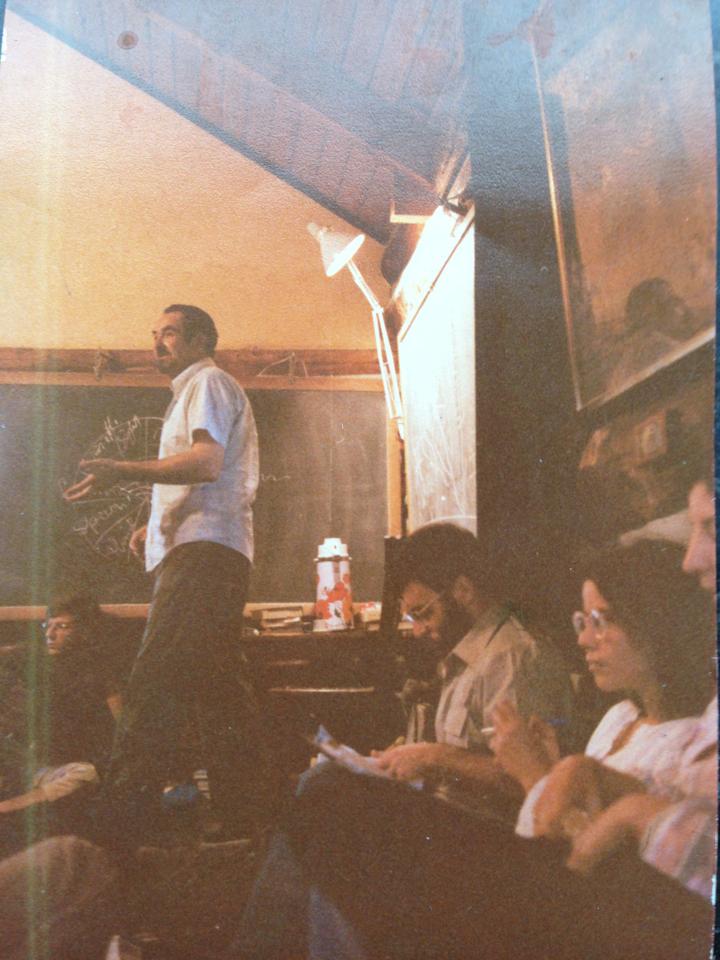
What we call “classes” were not parts of a course where, typically, the teacher provides a curriculum at the start of the course and then presents material in a series of classes as the course proceeds. Rather, Damiani used classes as discussion forums in which to investigate an idea in all its depth, ramifications, and consequences. He would usually have on hand several texts that he would read excerpts from, and then he would start explaining the passages or asking the assembled students questions about them.
He was interested in what we thought and encouraged us to voice our questions and expose our presuppositions or ignorance. Classes were often filled with boisterous debates, humorous asides, illustrative anecdotes, and probing questions that prompted puzzlement, doubt, reflection, and sometimes anxiety!
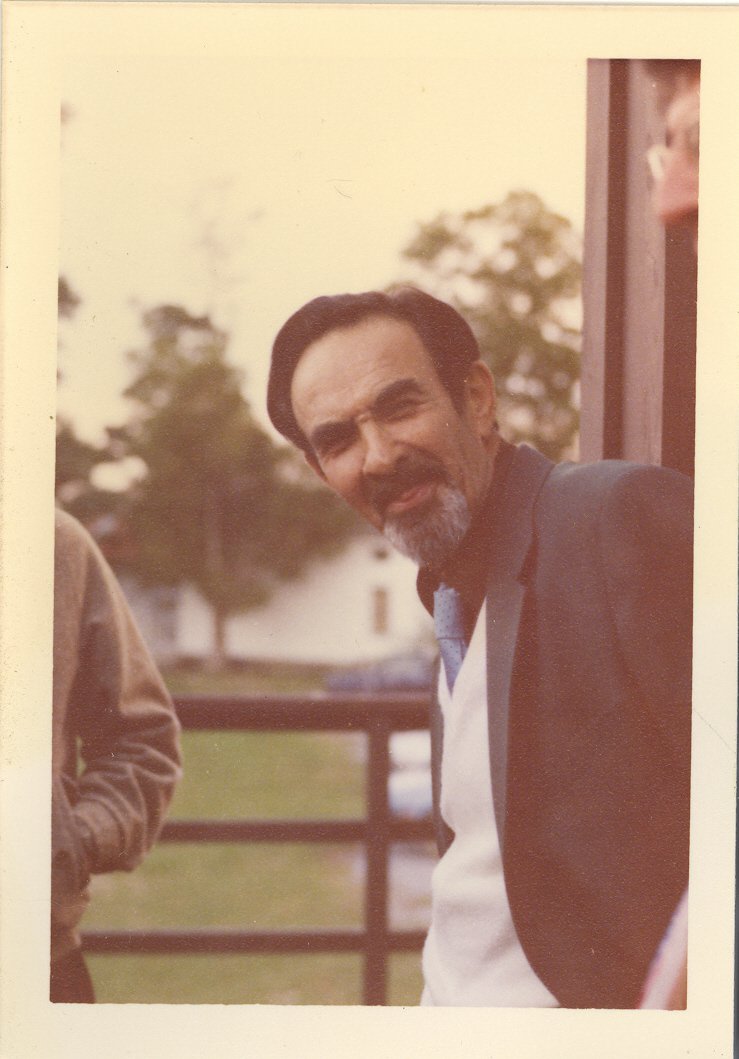
But when Damiani spoke with quiet authority about topics such as the nature of the soul and our connection to divinity, a hushed silence fell over the room. It seemed to us that he knew what he was talking about because he had experienced it firsthand, though he almost never talked about his own experiences. But his quiet voice, his demeanor, his shining eyes, his humility spoke volumes and touched us at our core.
Given the dialectical, dialogical, and investigative nature of the classes, the transcripts should not be read as providing definitive and fixed formulations of truth. They were part of his ongoing investigations, and his formulations of a problem and his solution to it evolved over time.
Also, these were dialogues, involving many speakers, not lectures. Damiani continually stressed that statements always have to be considered in context. Part of the context is the point of view, or presuppositions, of the speaker. Is the speaker speaking from the point of view of the ego, who unbeknownst to themselves, is already included in the world-image his deeper mind is presenting? Are they speaking from the point of view of the impersonal Witness-I? Or are they speaking as poised in the Intellectual-Principle? Do they presuppose that there is nothing that is the same moment to moment? Or are they speaking from an awareness that can’t be objectified in a way that places it in time at all? Not that these are the only possibilities.
Then too we must consider the goals the speaker has in engaging in the dialogue. In the classes, Damiani was sometimes trying to help a student articulate their own thinking about a topic, or helping them articulate a question, or exploring the consequences of a point of view or a school of thought. Other times he was trying to get at the truth of a situation. For example, in the classes and seminars on astrology, Damiani was trying to explore the foundational concepts of this esoteric science. What are the zodiacal signs an expression of? What does it mean for a planet to be in a sign or to be in a house? What are aspects between planets in a natal horoscope?
The work was exploratory and a working hypothesis that many students thought was settled truth would one day be overturned or cast aside as inadequate or just mistaken. Thus to be immersed in a class, whether by listening to the audio or reading the transcripts, is to engage in the vigorous thinking and dialectical energy at work. And if you are fortunate, it might provoke an intuition that sparks your own quest for Truth or it might open your heart to your own inner guidance.