About Anthony Damiani
Anthony Damiani (1922–1984) was the founder of Wisdom’s Goldenrod Center for Philosophic Studies, located in Hector, NY, and he taught there regularly from 1972 until his death. His magnum opus, Astronoesis: Philosophy’s Empirical Context, Astrology’s Transcendental Ground, completed and published posthumously by a few of his students in 2000, is a visionary work that shows how the structure of our cosmos both symbolizes and manifests divine wisdom. It uses a comparative approach to philosophy that draws on the insights of philosophic traditions East and West, but especially that of Plotinus, the second-century philosophic sage who is considered the founder of Neoplatonism.
Damiani was not only a philosophic genius but also a spiritual teacher to the hundreds of students who attended his classes. His teaching methods included cultivating sensitivity to beauty, especially through listening to inspired music; the practice of silent meditation, which included meditative concentration on short philosophic statements of truth; vigorous interrogation of philosophic texts, through group discussion and debate; and cultivating the ability to intuit the meanings and spiritual lessons afforded by our daily experiences.
Damiani was also one of the principal students of Paul Brunton (1898-1981), a fully illuminated adept who devoted his life to the understanding, realization, and sharing of spiritual truths. When Paul Brunton died, he assigned several of Damiani’s students to edit the vast treasury of his notebooks that he had reserved for posthumous publication, and his notebooks were thus sent to Wisdom’s Goldenrod. Many of the classes in the last three years of Damiani’s life were devoted to explaining the depths of meaning he found in his teacher’s inspired utterances.
A fundamental principle of Damiani’s approach to philosophy is that the universe is a manifestation of divinity, where divinity is conceived as wisdom—a knowing, living wisdom—one with the Divine Mind that possesses it. As engendered by this wisdom, the universe, and all the beings within it, have divine wisdom at their core. Now there are any number of philosophic traditions that share this view; for example, Platonism, Neoplatonism, Sufism, Kashmir Shaivism, Kabbalah, Tantric Buddhism, but what makes Damiani’s view quite distinctive is his use of astrological symbolism to articulate the structure of divine intelligence and its manifestation as both the cosmos and all the living beings in the cosmos (the macrocosm and the microcosm).
Moreover, the complexity of his ideas demanded that they be portrayed not only in words but also in pictures. He constantly drew diagrams that symbolized the connections between the various principles he was investigating. For example, he uses the glyphs for the five planets known to antiquity plus the Sun and Moon and the twelve signs of the zodiac, arranged in various configurations, to symbolize the unities in the One, the intelligibles in the Nous, the forms in the Soul, and the structure of the cosmos. And then these same symbols are used to symbolize the complex of meanings, dispositions, and characteristics that constitute the divine blueprint for each human life—that is, a person’s natal chart (horoscope), with its planets on particular degrees of a zodiacal sign placed in one or another of the twelve houses.
And that shows the beauty and power of this idea: the same astrological symbols can be used to represent both the principles that constitute a natal chart and the principles that constitute the cosmos because both sets of principles are manifestations of principles that transcend the sensible universe. For example, there is a solar principle in the natal chart, in the solar system, in the soul of the universe, in the world of Authentic Being, and, paradoxically, in the Absolute itself, the One of Plotinus. The referent of the term “sun” is not strictly speaking the same at each level, but there is enough continuity to make the use of the same term appropriate. The relationship of the referents at two levels is roughly that of image to archetype. Thus the astrological symbolism affords the possibility of peering, as it were, into God’s heart and seeing there the archetype of the world, a golden world.
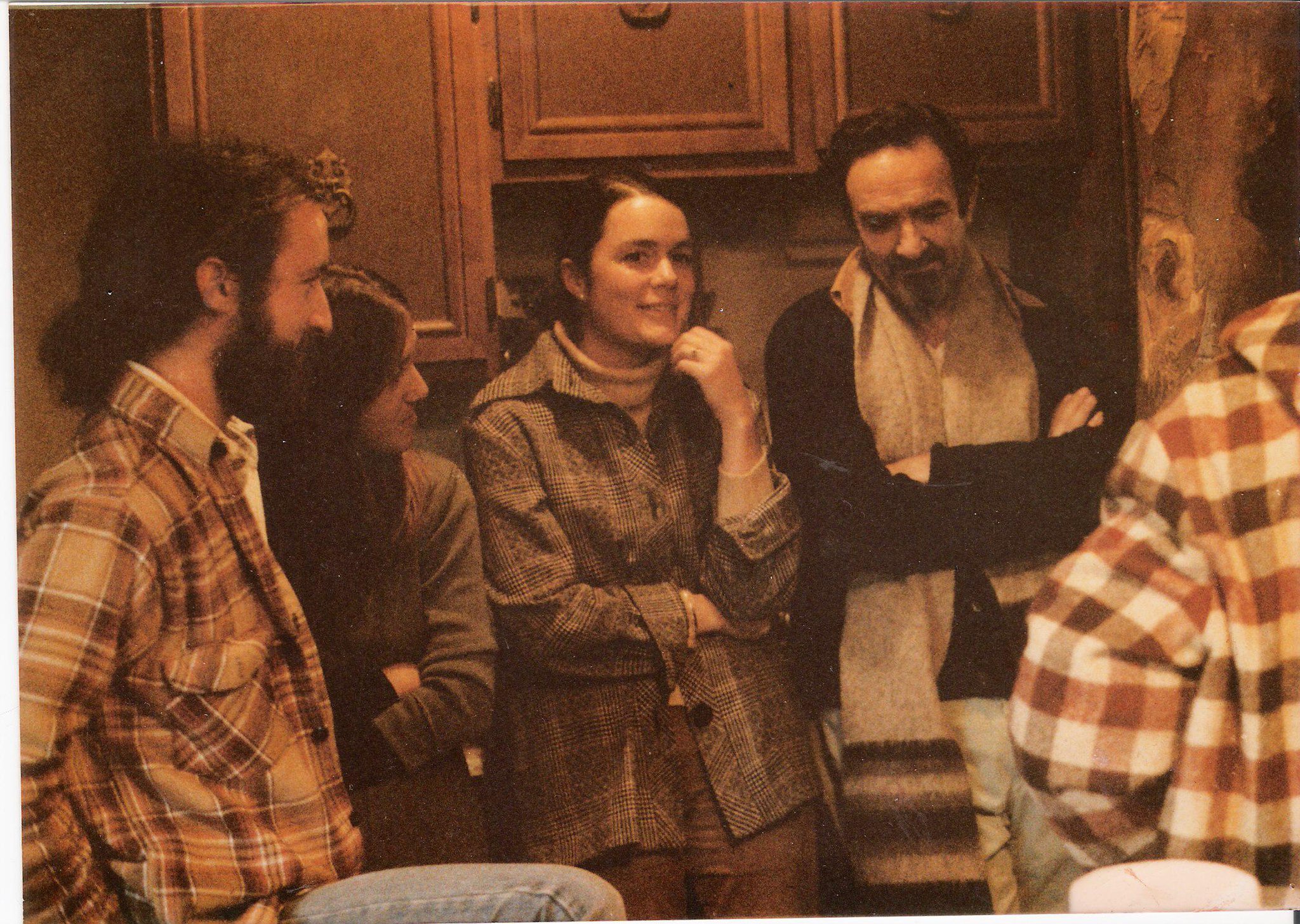
How did his vision of the fullness of Life affect what he taught and the way he taught? Anthony brought Plato and Plotinus to life for his students. For example, he taught that the Platonic Ideas are not causally inert, not mere concepts in the mind, but have life and power. In fact they are gods, and their power extends all the way to the functioning of the planets and degrees in our natal chart. So philosophical astrology is really theophany, the showing forth of the gods.
He also made his students feel the immediacy of Plotinus’s teachings by showing how the Soul is translating the Ideas into the sensible universe moment by moment. This process is constantly happening within us. The intelligible world lies deep within us, and our deeper mind, or Soul, is creating our world-experience by translating that intelligence into perception, which includes us as embodied selves. To discover that we contain the intelligible world at our core is the beginning of wisdom.
This vision also provides the foundation for the idea that we are being taught by the sequence of providentially arranged experiences that constitute our life here, and this education is designed (over an indeterminate series of lives) to make us enlightened beings, fully realized buddhas, able to express the higher possibilities of the Idea of Man, which is one of the divine Ideas.
And finally this awe-inspiring glimpse into the cosmic mysteries shows how astrology can be used to make us reflectively aware of the way we are being educated by Life. We can then be more open to what Life seeks in us; we can cooperate with it instead of resisting it, so that we can participate consciously in this process as co-creators.
And Damiani does all this in a very nonacademic way. He was self-taught and provided for his family by working a variety of jobs, including being a longshoreman on the New York City docks and a NYS Thruway toll collector. The class transcripts and audio files reveal a man with a Brooklyn accent who speaks passionately but knowledgeably about Plato, Plotinus, Sankara, Buddha, and Carl Jung. He doesn’t speak from the head, hesitantly, with endlessly qualified clauses, but from the heart and gut. He’s almost blunt at times. He spurs his students on, challenges them, argues with them, calls out their presuppositions and prejudices. At other times, he speaks quietly yet authoritatively about the higher mysteries revealed by the sages. Sometimes he is radiant, his voice resonant and evocative, as the divine truths flow from his speech. Sometimes he’s playful, and makes fun of his own status as a teacher, which is in contrast to the complete devotion and respect he has for his own spiritual guide, Paul Brunton.
He sacrificed himself daily for his students, spending several hours in the evenings at the American Brahman bookstore in Ithaca, NY, guiding students in meditation and teaching classes on the wisdom traditions, before leaving at 10 pm for his night shift on the NYS Thruway, an hour away. After the main building at Wisdom’s Goldenrod was built, he conducted classes six nights per week, and during the day on weekends. And following his retirement in 1979, he added weekday morning seminars to his teaching schedule several days per week.
He would have preferred to remain silent and teach through stillness only. But that wasn’t what Life asked of him. He continued teaching even after having a cancerous lung removed; the class would end when he said he had no breath left.
His spiritual power is evidenced by the devotion of his students to him and to what he taught. Forty years after his death, his students, many now in their 70s and 80s, are still engaged with studying and teaching Plotinus, PB, astrology, Astronoesis, and Buddhism. It was his students who decided collectively that it was important to create this archive to preserve his amazing vision of what Life can be and share it with others. We hope you find something here that calls you to remembrance of your divine nature.
-
To learn more about Anthony Damiani’s life, see the Biography of Anthony Damiani. This biography will give you a taste of the richness of his life and the passion he brought to every aspect of it.
-
To learn more about his integral vision and how the various topics he investigated can serve as entry points into the Archive, see Damiani’s integral vision.
-
To learn more about Paul Brunton and Damiani’s relationship with him, see About Paul Brunton as a spiritual guide.